Earnest: The Handwritten Font for Authentic Design
There’s a specific feeling you get when a piece of design just clicks. It’s not always about complex illustrations or a perfect grid; sometimes, it’s the typeface that does the heavy lifting. In a world saturated with sterile, geometric sans-serifs, finding a font with genuine character can feel like striking gold. That’s where a typeface like Earnest enters the conversation. It’s not just a collection of letters; it’s a carefully crafted tool for adding a human touch to your work, designed to evoke a sense of warmth, personality, and handcrafted quality.
More Than Just Pretty Letters: The Visual Soul of Earnest
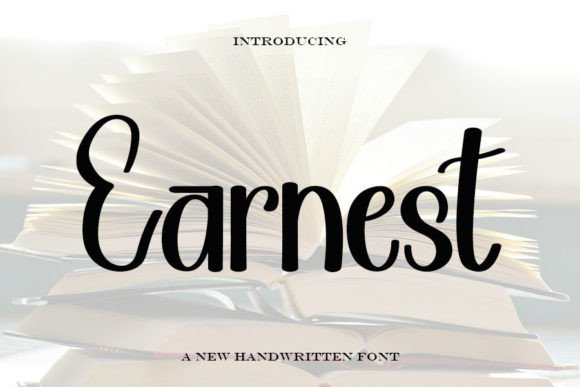
At its core, Earnest is a premium handwritten font, but that simple label doesn’t do it justice. Its defining feature is its elegant, flowing script that feels both intentional and organic. Unlike overly casual or messy script fonts, Earnest strikes a beautiful balance. The letterforms have a distinct rhythm, with gentle loops, consistent weight, and a slight slant that mimics natural handwriting. This isn't the font for a legal document, but it’s perfect for when you want your message to feel personal and considered.
The personality of Earnest is one of approachable sophistication. It’s confident without being loud, and stylish without feeling trendy. Think of it as the font equivalent of a beautifully handwritten note on quality stationery. This timeless style means it won’t look dated in a year. Its appeal lies in its versatility; it can feel romantic for a wedding invitation, artisanal for a coffee bag, or heartfelt for a personal blog header. The key is its ability to add a layer of authenticity that more rigid typefaces simply cannot achieve.
Where Earnest Truly Shines: Practical Applications
Understanding a font’s strengths is one thing; knowing where to apply them is where the real magic happens. Earnest isn’t a one-size-fits-all solution, but in the right context, it’s a game-changer for your brand identity and projects.
- Branding and Logo Design: For small businesses, boutiques, bakeries, consultants, and creative studios, Earnest can be the cornerstone of a logo design. It instantly communicates a brand that values craftsmanship and personal connection. It works exceptionally well for logos that pair a script wordmark with a clean sans serif font for the company name.
- Editorial and Publishing: In editorial design, use Earnest for pull quotes, chapter titles, or magazine headlines to break the monotony of body text. It adds a touch of elegance and draws the reader’s eye, improving the overall visual hierarchy of a layout.
- Packaging and Product Design: Imagine Earnest on the label of a handmade candle, a craft beer bottle, or a gourmet jam jar. It screams artisanal quality. For packaging design, it helps a product stand out on the shelf by telling a story of care and attention to detail.
- Digital and Web Presence: While not for body copy, Earnest is powerful for website hero sections, blog post titles, and call-to-action buttons. It can significantly boost audience engagement by making your digital presence feel less corporate and more human. The same applies to social media graphics, where a unique font can stop the scroll.
- Personal and Craft Projects: For wedding invitations, greeting cards, planners, or digital prints on Etsy, Earnest provides a professional, polished look that DIY creators love. It elevates personal projects to a commercial standard.
Using Earnest Effectively: A Designer's Practical Guide
Choosing a creative font is just the first step. Using it effectively is what separates good design from great design. Here’s how to integrate Earnest into your workflow for maximum impact.
1. Master the Art of Font Pairing
Earnest is a display font—its job is to grab attention. Pairing it with another expressive font is a recipe for visual chaos. The golden rule is contrast. Let Earnest be the star and pair it with a stable, highly legible partner. A classic serif font like Lora or Merriweather can create a sophisticated, timeless look. A clean, geometric sans serif font like Montserrat or Lato provides a modern, crisp counterpoint that ensures readability for longer text.
2. Prioritize Readability and Hierarchy
The flowing nature of any script font means you must be mindful of readability. Never set a paragraph in Earnest. Use it strategically for headlines, short phrases, or single words to create a strong focal point. This establishes a clear visual hierarchy, guiding your audience’s eye from the most expressive element (Earnest) to the more functional body text. Always test your designs at different sizes, especially for web design, to ensure the elegant details don’t get lost.
3. Evaluate the Full Package
Before committing to a commercial font, investigate what’s included. Does the Earnest typeface family come with alternates, ligatures, or stylistic sets? These features are invaluable. Alternates allow you to customize the look of specific letters to avoid repetition, while ligatures create more natural connections between characters, enhancing the handwritten feel. Reviewing the full character set ensures the font can adapt to all your design assets without limitation.
4. Understand the Licensing
This is a critical, often overlooked step. A premium font like Earnest comes with a license that dictates how you can use it. Are you using it for a client’s logo? For products sold on merchandise? For a mobile app? Each use case may require a different license type (desktop, webfont, app, e-pub). Purchasing the correct license protects you legally and supports the type designers who create these essential tools for the creative community.
Ultimately, Earnest is more than just a modern typography trend. It’s a versatile typeface built for creators who understand that the details matter. By thoughtfully applying its elegant style, you can infuse your projects with a sense of authenticity and care that resonates deeply with your audience, turning simple designs into memorable experiences.