Scary Night Duo: More Than Just a Halloween Font
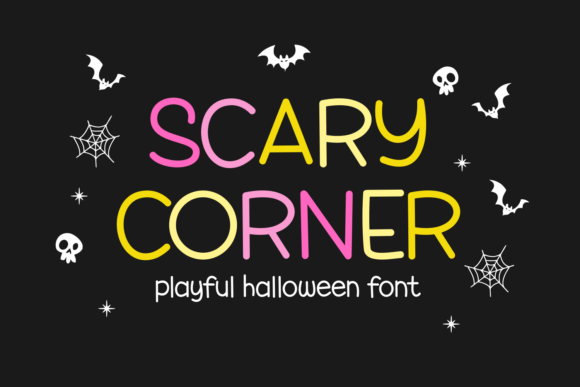
When a client asks for "spooky but friendly" for a children's book cover or a local haunted house flyer, I know exactly the kind of typeface they need. They're not looking for something that will genuinely terrify. They want that sweet spot of playful eeriness—think classic movie monster cereal boxes or a charmingly haunted gingerbread house. That's precisely the space Scary Night Duo inhabits. This isn't a font that screams in the dark; it whispers with a mischievous grin.
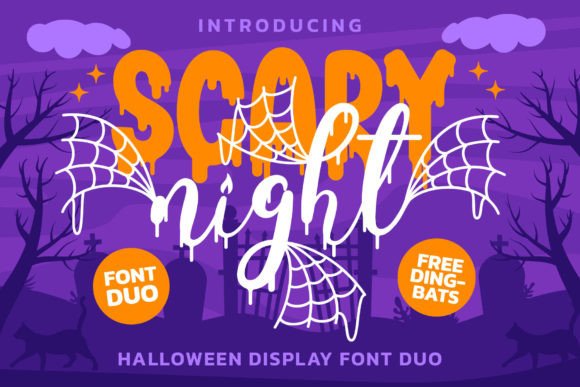
As a premium font, it's built on a clever concept: pairing a loose, energetic handwritten font with a more structured, decorative display font. The handwritten component carries the personality, full of wobbly lines and imperfect charm that feels authentically crafted. Its companion display style adds weight and presence, often featuring subtle thematic details—maybe a slight drip on a letterform or a curl that suggests a vine or a spider's leg. Together, they create a complete visual voice for any project that needs to balance the macabre with the delightful.
Where This Typeface Truly Comes Alive
Forget limiting Scary Night Duo to October 31st. Its real strength is in projects where a touch of whimsical darkness is the goal year-round. For packaging design, imagine it on artisanal candy labels, craft brewery seasonal stouts, or even a line of fantasy-themed candles. The font's character immediately communicates a story, setting the product apart on a crowded shelf.
In the world of editorial design, it's a standout for chapter headings in middle-grade fantasy novels, eye-catching pull quotes in a spooky anthology, or the title treatment for a Halloween-themed magazine spread. For brand identity, it could define the logo for a specialty bakery, a escape room venue, or a podcast about folklore. The key is that it provides instant thematic recognition, a cornerstone of effective modern typography.
Digital applications are equally compelling. Use it for social media graphics promoting a fall festival, a book launch, or a themed online sale. Its high-contrast pairing ensures the main message (the display font) pops in a fast-scrolling feed, while the handwritten style adds approachable detail in supporting text. For web design, it can hero a landing page for a seasonal event, but I'd advise using it sparingly for headlines and calls-to-action, not body copy.
Making Smart Design Choices with a Thematic Font
The biggest mistake with a creative font like this is overuse. Its power is in its specificity. A full paragraph set in the display style would be visually overwhelming and difficult to read. Instead, think of Scary Night Duo as your headline act. Use the display variant for your primary title or logo. Let the handwritten style handle subheadings, short quotes, or key descriptive phrases. This creates a natural visual hierarchy that guides the viewer's eye without causing fatigue.
Pairing is critical. Because Scary Night Duo has such a strong personality, it needs a calm, neutral partner. A clean sans serif font for body text is almost always a safe and effective choice. Think of a sturdy geometric sans or a humanist sans with good x-height. If you want a touch more elegance, a simple, modern serif font with low contrast could work for longer-form text in a book or magazine, but test it carefully for readability. The goal is to let the thematic font shine while ensuring the supporting text remains perfectly legible.
Evaluating Fit and Practical Details
Before you commit, ask yourself: does the "spooky-cute" vibe match the project's core message? If you're designing for a law firm, obviously not. But for a kids' Halloween party invitation? Perfect. Pull a few key words from your project brief—whimsical, eerie, playful, mysterious—and see if the font's personality aligns.
Always test the font in context. Mock up a headline with your actual copy. Does the letter spacing feel right? Does the chosen style maintain clarity at the size you'll use it? Pay attention to the readability of individual characters; in a stylized display font, an 'a' and an 'o' or a 'c' and an 'e' can sometimes blur together. Scary Night Duo is well-designed to mitigate this, but your own due diligence is part of the professional process.
Finally, understand what you're getting. A major benefit here is the PUA encoding. This means every stylistic alternate, swash, and glyph is accessible directly through your operating system's character map or the glyph panel in software like Adobe Illustrator or InDesign. You don't need advanced OpenType features enabled in your app to use the full set of decorations. For a designer, this is a huge practical advantage, offering full creative control without technical headaches.
Choosing the right typeface is about finding a tool that solves a specific problem and elevates the work. Scary Night Duo is a specialized tool. When used thoughtfully and paired wisely, it becomes more than a font—it becomes a key part of the narrative, instantly setting a mood that connects with an audience looking for a little friendly fright.