Why Baby Aletha Feels Like a Whispered Secret
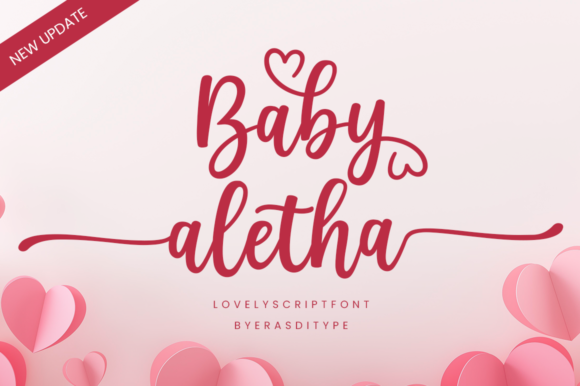
You know that feeling when you stumble across something that just feels right? That’s what happened when I first opened the Baby Aletha typeface. It wasn’t just another script font added to a crowded folder on my hard drive. It felt like finding a missing piece for projects that needed a specific kind of warmth—a blend of casual elegance and personal touch that’s surprisingly hard to nail down. This isn't a font that shouts; it converses. The characters seem to dance along the baseline with a gentle, rhythmic flow, creating a visual cadence that feels both romantic and approachable.
As someone who works with branding and design daily, I’m constantly evaluating typefaces not just for their beauty, but for their utility. Baby Aletha presents itself as a premium font, but its value lies in its specific personality. It’s a calligraphic style that avoids the extremes of being too formal or too childish. The letterforms have a sweet, slightly connected quality, with elegant swashes and ligatures that feel organic rather than overly engineered. This gives it a luxury spark, but one that’s accessible and friendly. It’s the kind of creative font that can make a design feel handcrafted and intentional, elevating a project from merely functional to genuinely engaging.
Finding the Perfect Home for This Font
So, where does a typeface like Baby Aletha truly shine? Its sweet spot is in projects where personal connection and a touch of sophistication are key. Think beyond the obvious wedding invitations. In brand identity, it can be a game-changer for boutique businesses—imagine a florist, a custom stationer, a small-batch baker, or a personal stylist using it for their logo design. The font’s personality communicates care, attention to detail, and a human touch that sans serif fonts often struggle to convey.
For marketing and content creators, this is a valuable design asset. It works beautifully for creating compelling social media graphics, especially for quotes, announcements, or feature calls-to-action that need to stand out in a busy feed. In editorial design, it can add a beautiful accent to magazine layouts, blog headers, or pull quotes in a long-form article, breaking up the monotony of body text. For packaging design, it can instantly suggest a product that is artisanal and premium. Even for personal projects—like crafting a family recipe book or designing a heartfelt thank-you card—Baby Aletha adds a layer of emotional resonance that generic fonts simply don’t have.
The Practical Side of Using a Script Font
Let’s talk real-world application. A beautiful font is useless if it hinders communication. Baby Aletha, as a script typeface, is primarily a display font. This means its main strength is in headlines, logos, and short bursts of text where its personality can be fully appreciated. Using it for long paragraphs of body copy would be a mistake—readability would plummet. The key is to pair it intelligently. A clean, neutral sans serif font or a sturdy serif font makes an ideal partner, handling the heavy lifting of body text while Baby Aletha delivers the emotional punch in the headline or logo.
When you first install the font, take the time to explore what’s included. Because it’s PUA encoded, you have access to all the alternate characters, swashes, and ligatures through your software’s glyph panel. This is where the magic happens. Experimenting with these variations allows you to customize words, avoiding awkward letter combinations and creating truly unique typographic compositions. Test it in your specific context. Does it work at the size you need? How does it look in your brand’s color palette? A font that looks stunning in black on white might feel different in a muted pastel. This hands-on testing is a non-negotiable part of the design process.
Making It Work for Your Brand
For entrepreneurs and small business owners, choosing a font is a strategic decision. Baby Aletha can strongly influence brand perception. It suggests a brand that values aesthetics, craftsmanship, and personal connection. It can make a business feel more approachable and trustworthy. However, consistency is crucial. Once you decide to use it, document its usage rules in your brand guidelines. Define when and where it should be applied to maintain a cohesive brand identity across your website, social media, printed materials, and packaging.
Always consider the commercial licensing. If you’re using Baby Aletha for a client project or for products you sell, ensure you have the correct license. This isn’t just a legal formality; it’s about respecting the work of the type designer and ensuring your project is built on a professional foundation. The investment in a proper license for a quality font is an investment in your project’s integrity.
A Font That Adds More Than Just Letters
Ultimately, Baby Aletha is more than a collection of glyphs. It’s a tool for adding a specific kind of emotional texture to your work. It’s for the designer who needs to convey romance without cliché, for the marketer aiming to create ads that feel personal, and for the crafter who wants their handmade goods to look as special as they are. In a digital landscape often dominated by sharp, geometric fonts, the soft, dancing rhythm of this typeface offers a refreshing change of pace. It reminds us that design, at its best, is about human connection—and sometimes, that connection starts with the gentle curve of a letter.