Salad Roll: A Handwritten Font with Heart and Character
The Curvy, Playful Spirit of Salad Roll
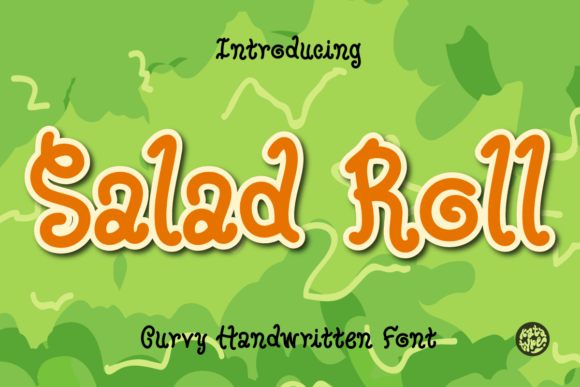
There’s a certain warmth that comes from something genuinely handmade. It’s the slight wobble in a child’s drawing, the uneven texture of fresh bread, the looping signature on a heartfelt note. This is the spirit captured in Salad Roll, a handwritten font that feels less like a digital tool and more like a friendly conversation. Its letters are soft, curvy, and unapologetically playful, with a natural bounce that brings instant personality to any project. Unlike rigid, perfect typefaces, Salad Roll embraces the beautiful imperfections of hand-lettering, offering a design asset that feels authentic and approachable. It’s a premium font that doesn’t take itself too seriously, making it a secret weapon for designers and creators looking to inject a dose of genuine charm.
Visually, Salad Roll sits in a sweet spot. It’s not a wild, untamed script font that sacrifices legibility for flair. Instead, its letterforms are carefully crafted to maintain clarity while preserving that handcrafted feel. The strokes have a consistent, friendly weight, and the connections between letters flow smoothly, creating a cohesive word shape that’s easy to read at a glance. This balance is crucial. Many handwritten fonts can become a visual puzzle, but Salad Roll prioritizes communication. It’s the kind of creative font you can use confidently for a headline on a poster or a line of text on a product label, knowing the message will land clearly and with a smile.
Where Salad Roll Truly Shines: Real-World Applications
Understanding a font’s personality is one thing; knowing where to deploy it is where the real strategy lies. Salad Roll excels in projects that benefit from a soft, human touch. Think about the first impression of a greeting card. A stiff, corporate serif font feels impersonal, but Salad Roll immediately sets a tone of warmth and care, making the recipient feel the personal effort behind the gesture. This translates beautifully to children's book design, where its friendly curves can guide young readers through a story without intimidating them. For handcrafted items—whether it’s a label for homemade jam, a tag for a knitted scarf, or a logo for a local artisan—the font acts as a visual handshake, signaling quality and personal attention.
In the digital realm, its utility is just as powerful. For social media graphics, where you have mere seconds to capture a scrolling thumb, Salad Roll cuts through the noise. It’s perfect for Instagram quotes, Facebook event announcements, or Pinterest pins that aim to feel inspirational, relatable, or fun. Entrepreneurs and small business owners can leverage it in their brand identity to craft a voice that’s friendly and approachable. Imagine a bakery’s logo, a yoga studio’s promotional material, or a local café’s menu board rendered in Salad Roll. It communicates a promise of a relaxed, welcoming experience before a customer even steps inside. It’s also an excellent choice for packaging design for products targeting a family or lifestyle audience, adding a shelf appeal that feels genuine rather than mass-produced.
Strategic Use: Pairing, Readability, and Licensing
Choosing the right font is a design decision that impacts everything from readability to brand perception. Salad Roll, as a display font, is rarely meant to be the workhorse for long paragraphs of body copy. Its strength is in headlines, subheads, pull quotes, and short bursts of key messaging. For editorial design or a blog layout, pair it with a clean, neutral sans serif font or a classic, readable serif font for body text. This creates a clear visual hierarchy, where Salad Roll draws the eye to the important points, and the complementary typeface ensures the details are easily digestible. A pairing like this enhances professionalism by showing thoughtful design consideration.
When evaluating its fit for a project, consider your audience. Salad Roll resonates powerfully with demographics that value authenticity and creativity—think parents, hobbyists, and consumers who support small businesses. It’s a font that builds audience engagement by feeling human and relatable. Always test it in context. View it at the size it will be used, on both a screen and a printed mock-up if possible. Check how it reads against different background colors and textures. Most premium fonts, including Salad Roll, come with multiple styles or alternates. Explore these included variations to add even more dynamism to your designs, perhaps using a slightly different swash for a decorative initial.
Finally, a practical note on usage. If you’re considering Salad Roll for a commercial project—a client’s logo, a product for sale, or marketing materials—ensure you understand the licensing terms. A quality commercial font license provides the legal foundation for your work, protecting both you and the font designer. It’s an investment in your project’s integrity and a step toward building a consistent, recognizable brand identity. In a world saturated with generic visuals, a thoughtfully chosen typeface like Salad Roll can be the subtle, powerful detail that makes your work memorable, engaging, and unmistakably yours.